
Where Sea Meets Shore: Communities and Science Working to Sustain Seagrass
On the shores of Sulaman Bay, some 60km away from Kota Kinabalu, capital of Malaysia’s Sabah state, more than 30 local community members—many of them artisanal fishers—worked alongside marine researchers at low tide.
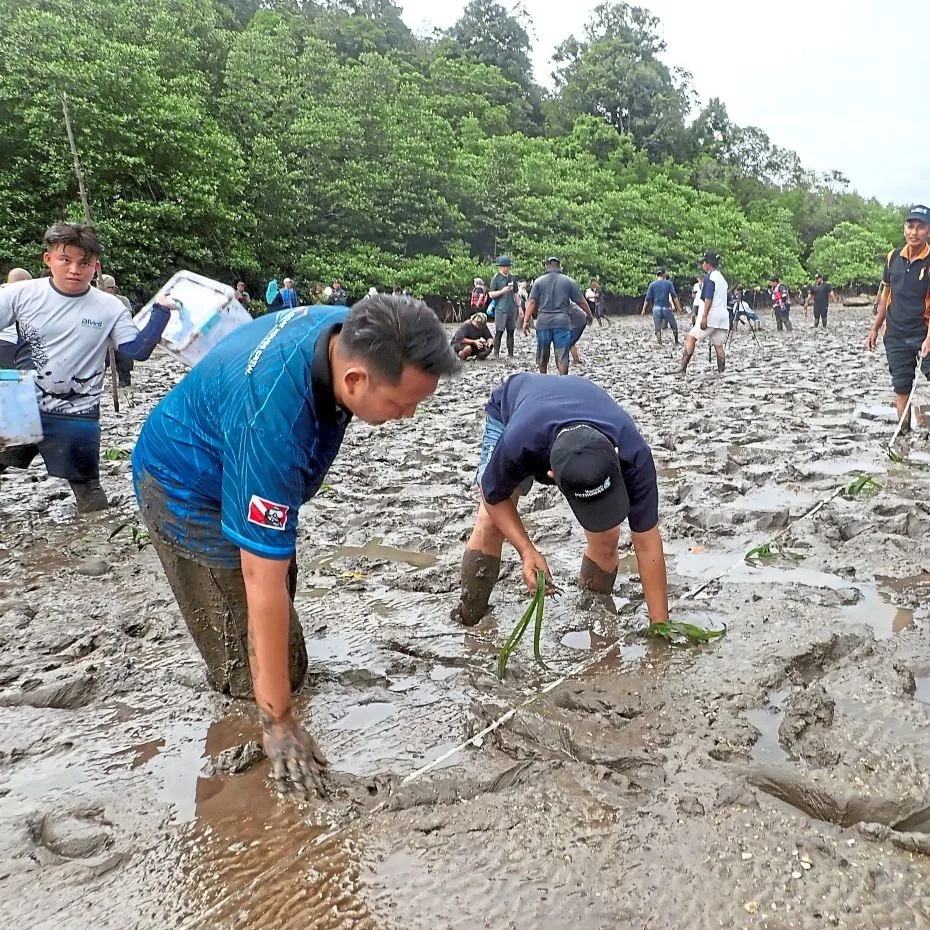
Wading through knee-deep silt, they carried baskets of seagrass shoots to designated planting sites. One researcher held a line, while another guided the group to replant the shoots in measured rows, very much like the careful process of planting paddy.
The planting activity forms part of the Seagrass Mapping and Community-Based Programme, an initiative by Yayasan PETRONAS that seeks to contribute to addressing this gap. Implemented in collaboration with UMS, Universiti Malaya and Universiti Putra Malaysia, and supported by strategic partners such as Malaysia’s Department of Fisheries and Sabah Biodiversity Centre, the programme seeks to map and protect seagrass meadows, and nurture communities to be seagrass stewards.
The researchers, from the University of Malaysia Sabah (UMS), hope that this work, part of a broader seagrass mapping and outreach programme, can help train local communities to restore seagrass meadows while supporting marine life and coastal livelihoods.
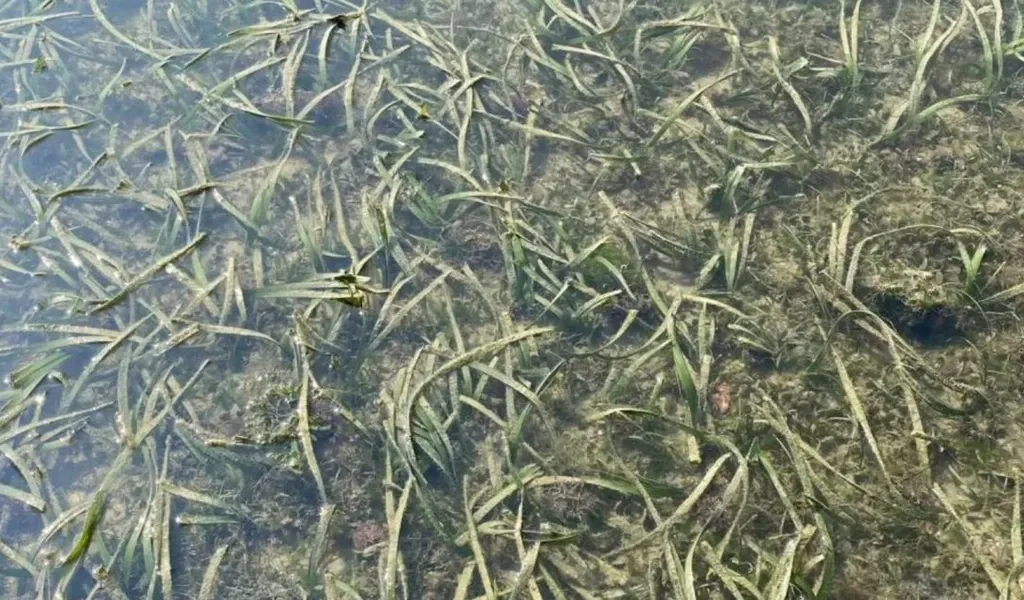
Often overlooked, seagrass is among the ocean’s most important ecosystems. These marine plants help to stabilise shorelines, reduce erosion while also acting as natural carbon sinks. Their underwater canopies serve as nursery for fish, crustaceans and other marine life that feed and bring livelihoods to local communities. Yet, seagrass in Malaysia remain insufficiently mapped and understood.
For researchers at UMS, seagrass mapping also involves collecting and analysing water samples from Sulaman Bay and other sites to detect marine life. What they found ranged from the commercially attractive rabbitfish and tiger prawns to the near threatened or endangered cowtail rays and dugongs—underscoring the ecological significance of these habitats.
In communities like Kampung Penimbawan, a coastal village overlooking Sulaman Bay, and small-scale fishing remains a vital economic backbone. Integrating sustainable fisheries practices, science and traditional knowledge offers a pathway to protect seagrass meadows while uplifting coastal livelihoods.
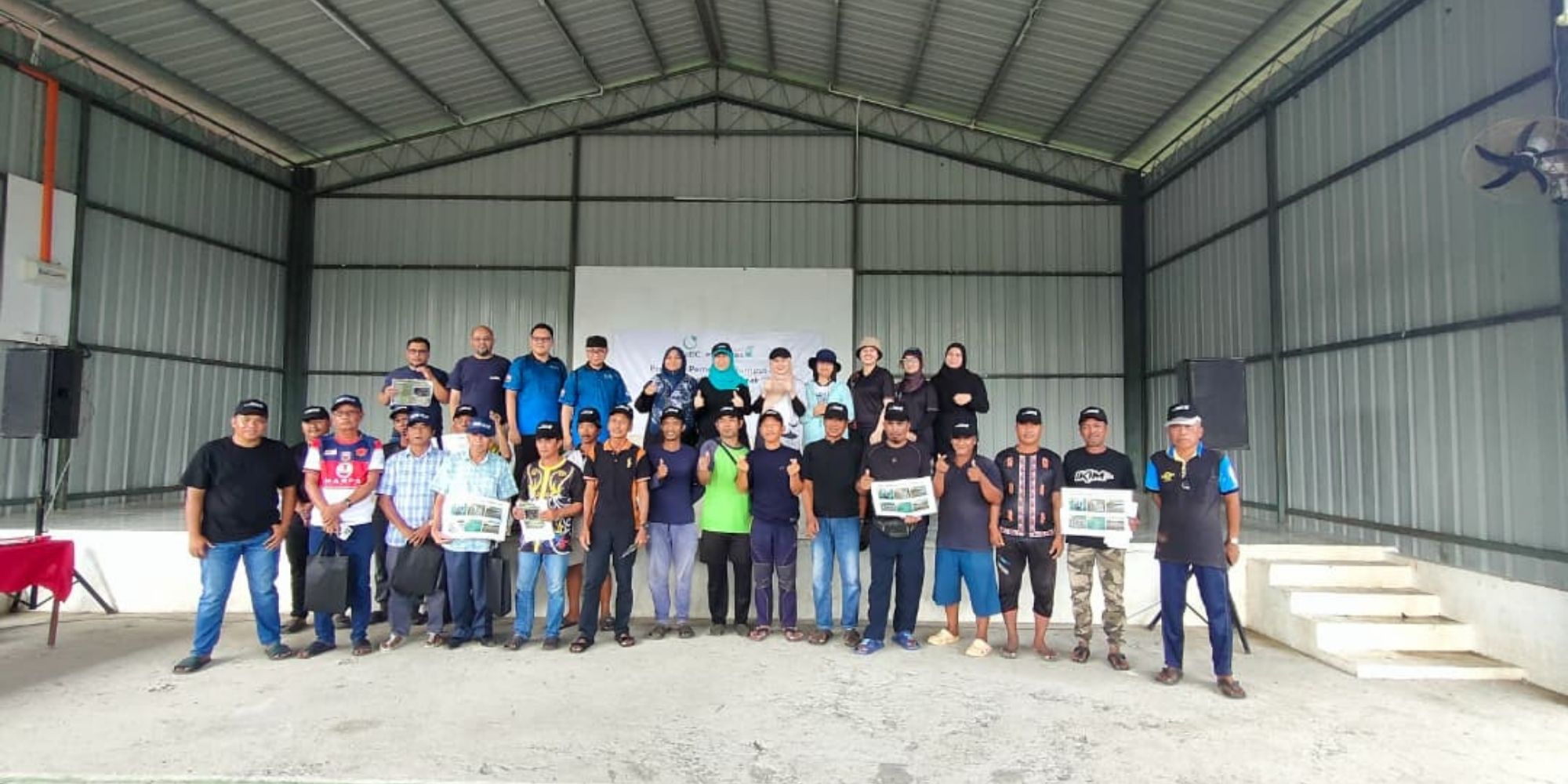
“Our livelihoods and future are closely connected to these meadows. We hope that what we have planted and learnt today will soon bring back the fishes, crabs and prawns to our waters,” said Haji Jelin, Kampung Penimbawan’s community leader. For coastal communities, restoring seagrass is not just about conservation. It is about safeguarding food security and their future. Through participation in monitoring and restoration activities, community members are engaged as partners in stewardship—encouraging shared responsibility while building climate resilience.
Engagement with local communities is central to this effort. Across participating sites, researchers work with residents and schoolchildren to share how common fishing practices, such as dropping heavy anchors or dragging chains, can damage seagrass beds by uprooting plants and disturbing the seabed.
As the day comes to a close, a fisherman plants the last of the seagrass shoots in the seabed. The act is simple, but it reflects a quiet hope. One that looks toward sustaining both nature and livelihoods for years to come.